Landscape Through a Time Window
Landscape through a time window – this is how we could describe the view offered by this visualization. It allows us to observe the land in two time layers. Two images – one from today and one from 8,000 years ago – can be placed on top of each other and compared by sliding to reveal differences. With a single movement, you can literally “travel through time” to see how the landscape has changed, disappeared, or come alive again.
Every Landscape Has Its Story
We live in a landscape that we often take for granted. Roads, buildings, meadows, forests, rivers, and streams seem constant and unchanging. Yet, if we look back in time, we realize that what we see today is just one short episode in a long story written by nature itself.
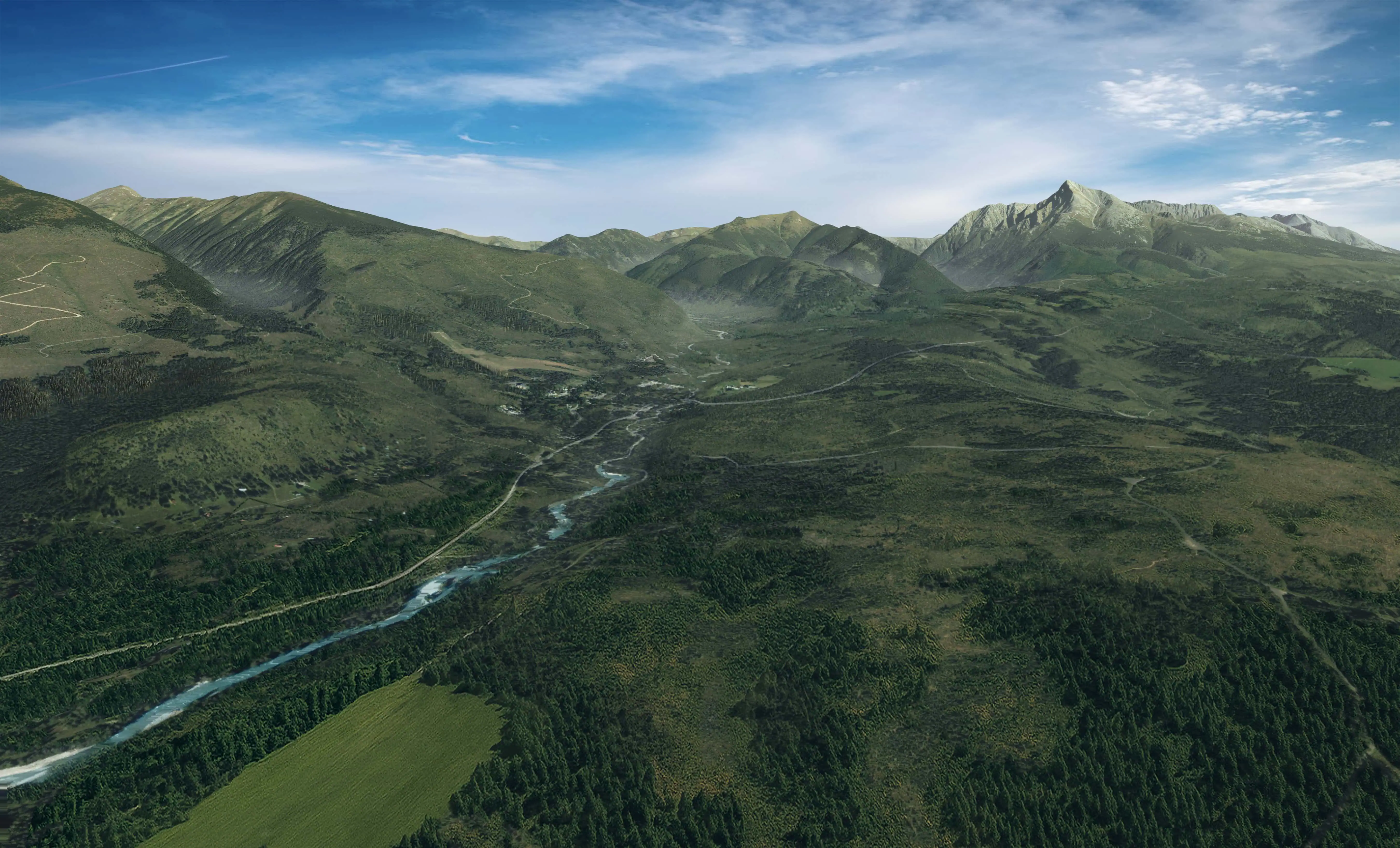
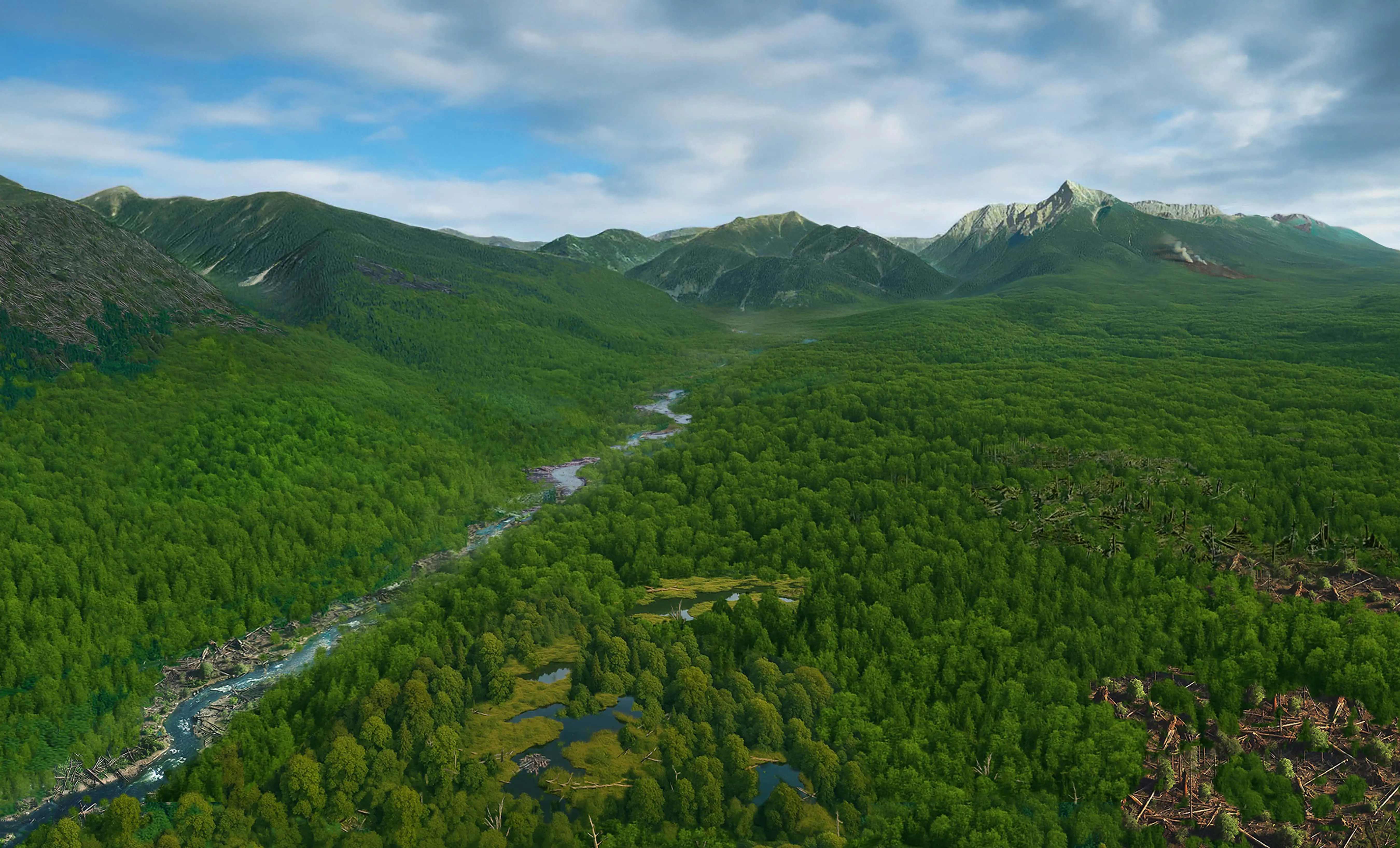
After several years of work, two identical perspectives of Krivan and its surroundings in the Tatra National Park were created – one shows the current landscape, the other reconstructs what it looked like 8,000 years ago. The image of the past was made using verified scientific data – it’s not fantasy, but a reconstruction of real history.
With this visualization, we can overlay the two images and observe differences as we move the divider. That’s where the story begins – a story of wild nature, changes, and transformations. A story that even non–scientists can easily understand.

Eight thousand years ago, the Tatra region was at the peak of its natural power
When the Land Didn’t Know People Yet
Eight thousand years ago, the Tatra region was at the peak of its natural power. The climate was at its optimum – the warmest period of the last 20,000 years. Forests grew higher than we can imagine today. There were no roads, fields, or pastures – only endless, untamed wilderness governed by natural balance without human influence.
At that time, continuous primeval forests dominated around Krivan. Deciduous forests (oak, maple, ash, elm, linden) stretched from the foothills up the slopes, smoothly transitioning into mixed and then dense coniferous forests (spruce, fir, pine, Swiss stone pine). The highest parts of the mountains were covered by dwarf pine. Each forest layer had its place and function, forming a living and untouched wilderness where every element of nature had meaning and rhythm.
When we compare these images with today’s landscape, we see two parallel worlds – one wild and diverse, the other shaped and controlled by humans. In this visualization, these worlds meet, one overlapping the other. Suddenly, you stand between them – one foot in the past, the other in the present – hearing the landscape tell its stories.
Today’s View – What We See and What We Don’t
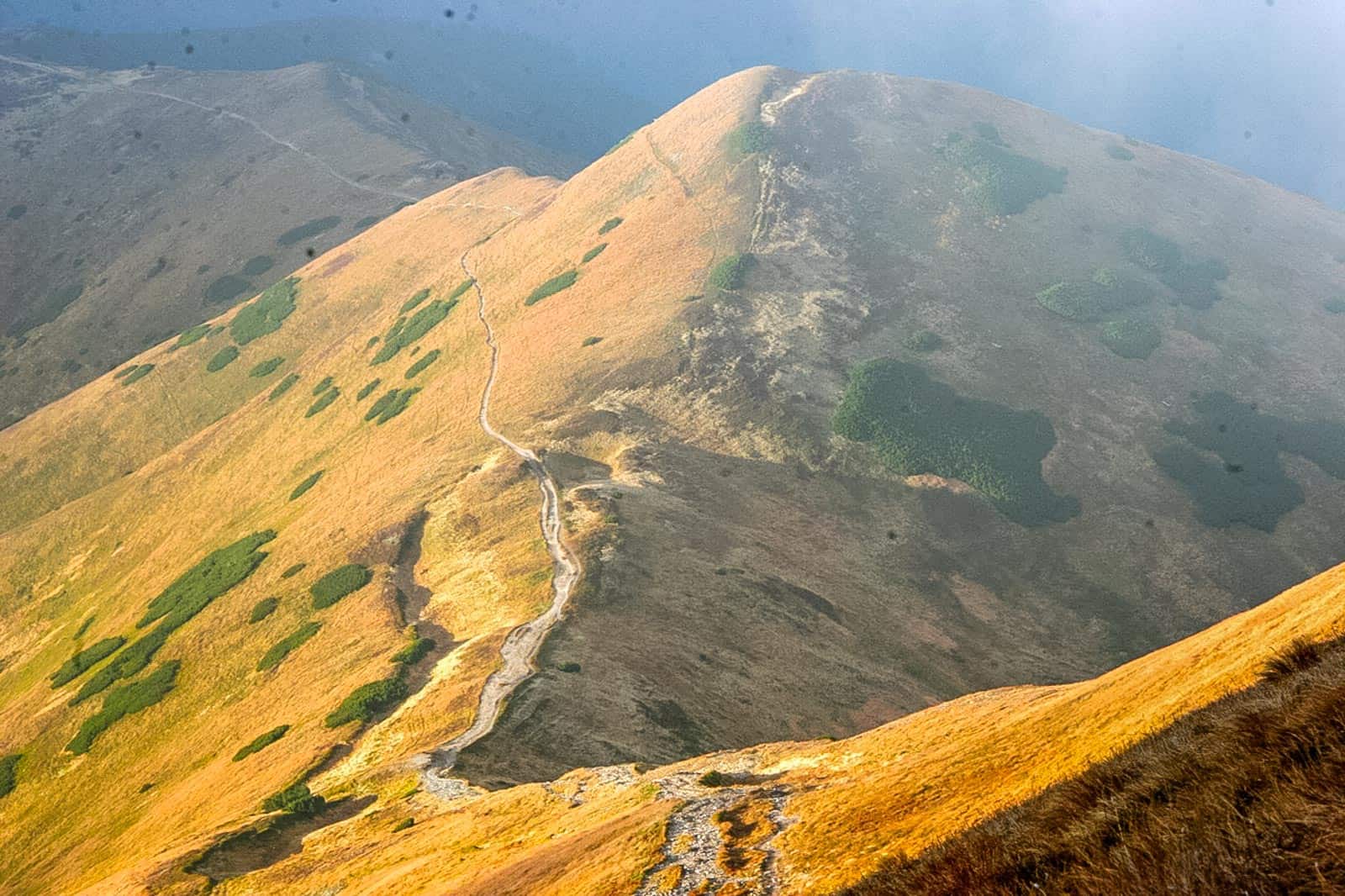
Today, the Tatra region has been deeply transformed by humans. In the foothills, fields, roads, and villages blend with forest fragments that have long lost their original character. On the slopes, primeval forests have disappeared, replaced by managed tree plantations – mostly conifers planted by humans. Original mixed and deciduous forests have retreated or vanished. The result is reduced biodiversity and loss of the original natural variety.
This visualization allows us not only to describe these changes but also to see them. By blending the two images – the present landscape and that from 8,000 years ago – we can clearly observe the evolution of the Tatra region. A single glance reveals how the land has changed over time, where wilderness has disappeared, and where human traces have emerged.
Two Landscapes, One Story – What the Comparison Teaches Us
When I moved the dividing line between the two images, I felt like standing with one foot in the present and the other in the world of 8,000 years ago. Where clear–cuts are today, I suddenly saw ancient forests, wetlands, the wild Bela River, and natural processes – fires, windstorms, and avalanches. This view helped me understand that these phenomena were essential parts of the life of ancient forests. They created the dynamics that kept the wild Tatra nature in balance – the same nature we now recognize only through the quiet traces of the past.
Conclusion
One of the results of the volunteer group’s work on the visualization project Tatras Through Time – A Window into the Past, depicting the landscape of Tatra National Park in Slovakia today and 8,000 years ago.
This visualization offers a clear and accessible way to understand complex changes in the landscape. What would otherwise remain hidden in scientific studies becomes a visible image that anyone can understand. It allows us to see the history of familiar places differently – through the eyes of time that shaped them for thousands of years. And it reminds us that wilderness – wild, self-sustaining nature – is not only our past but also the key to a living future.
Share this:

Discover more from European Wilderness Society
Subscribe to get the latest posts sent to your email.