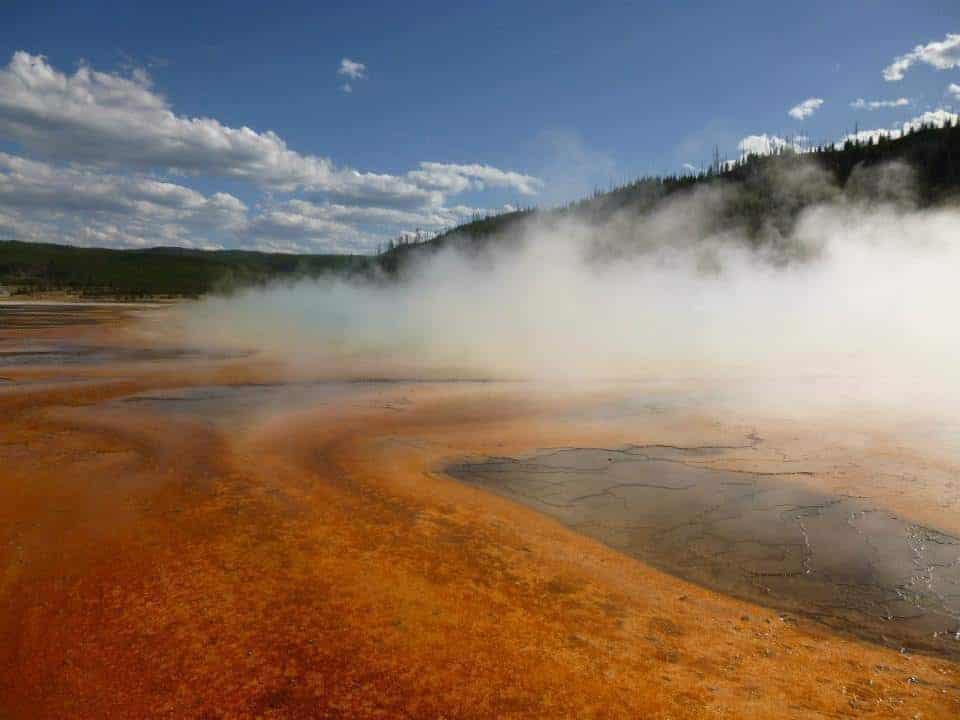
Volunteer Visualising Prehistoric Wilderness
Volunteers are vital for European Wilderness Society because they bring energy, diverse skills and international collaboration to help identify, protect and promote Europe’s last wild places. One of them is Vlado Antol from Slovakia.
I am a professional employee of the Slovak Hydrometeorological Institute. In my free time, however, I devote myself to something that attracts me in a completely different way – I am a volunteer for the international non-profit organisation European Wilderness Society. As a volunteer, I use my skills in graphic software and my ability to refine the visual details of prehistoric landscapes. For the third year now, I have been involved in a visualisation project focused on prehistoric wilderness and on how the landscape of our ancestors may have looked thousands of years ago. Vlado Antol

A Man of Many Professions
Vlado Antol has a diverse professional background – he studied graphic design, worked for many years as a graphic artist, and in recent years, following in his father’s footsteps, he has been working as an applied climatologist. In addition, he trains young skiers. Recently, he discovered the potential of artificial intelligence in digital graphics and began using it to create realistic landscape visualisations. Thanks to this combination of skills and experience, he has become a part of European Wilderness Society. He is a part of the team dedicated to presenting prehistoric wilderness in a way that is both understandable and visually engaging for the wider public.

Bringing Prehistoric Wilderness to Life
Within the visualisation project, he collaborates with a friend and core team member of the European Wilderness Society, Vlado Vancura, who has many years of experience in wilderness conservation. Together, they focus on depicting prehistoric wilderness and on connecting scientific knowledge about natural history with an artistic perspective and strong observational skills.
This small team of enthusiasts works closely with experts who have been studying the prehistoric history of the Tatras and the Carpathians for many years. Based on their texts, studies, and interviews, they create landscape images showing how the world might have looked when prehistoric wilderness dominated Europe.
The project, to which he contributes significantly, does not aim to confirm or disprove scientific theories. Instead, it visualises the dynamics of natural processes – showing how the landscape changed over time.

Conclusion
I became a volunteer for the European Wilderness Society mainly out of a desire to meet new people, learn new things, and understand how modern technologies can be used in nature conservation. Contributing to this international organisation has opened the door to a world where science, creativity, and a passion for wilderness come together. This experience helps me in developing my own skills while also sharing knowledge about the prehistoric past of our landscape with a wider audience who might otherwise never encounter it.Being a volunteer for the European Wilderness Society is both an inspiring and enriching experience. It has shown me that individuals can contribute to the common goal of protecting and better understanding the last remnants of Europe’s wilderness.
Share this:

Discover more from European Wilderness Society
Subscribe to get the latest posts sent to your email.