
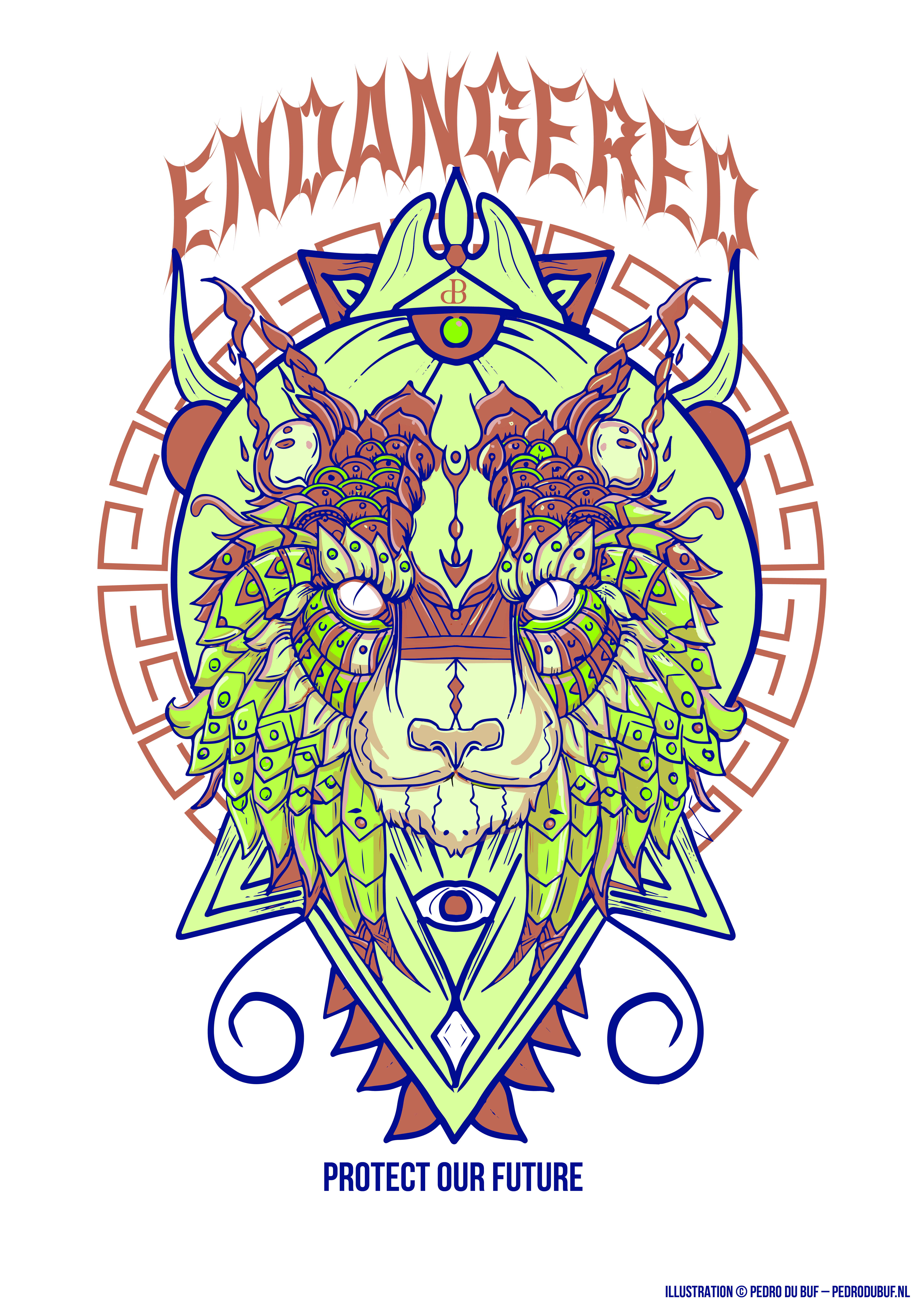
International Lynx Day: How art awakes attention
Today we celebrate International Lynx Day and are happy to introduce you an artist, Pedro du Buf, supporting wild life communication.
How art awakes attention
At the European Wilderness Society, we believe that wilderness protection begins with attention: with learning to see, to value and to respect the life around us. In the work of artist Pedro du Buf, the lynx becomes more than an image: it becomes an invitation to look more closely, to feel more deeply, and to reconnect with one of Europe’s most elusive wild animals.
Pedro describes himself as a multidisciplinary artist and creative designer with roots in Portugal and Switzerland, working across painting, fine art, illustration and animal concept drawings. In his own artistic language, wildlife is not only something to portray, but something to approach with care and awareness.
Making the Invisible Visible
The lynx is a species that easily escapes our notice. It moves in silence, leaves only traces, and often remains unseen even where it is present. That is part of its mystery, but also part of its challenge. Animals that stay hidden can also be forgotten. This is why art matters so much in conservation: it can make the invisible visible, and it can transform distance into connection.
This is where Pedro du Buf’s work speaks so strongly to the mission of the European Wilderness Society. His lynx paintings and illustrations do more than show the beauty of a wild cat. They create a moment of stillness. They encourage viewers to slow down, to observe with greater care, and to recognise that wild animals are not decorations in a landscape, but living beings with their own presence, dignity and place in the natural world.
That message aligns closely with Pedro’s own self-description as an artist driven by thoughtful visual storytelling, empathy and meaningful connection.
We have asked artist and photographer – Pedro du Buf: What do you hope people notice first when they look at your lynx artwork?
I hope they first feel its presence. Not only the animal itself, but the calm strength it carries. If the image invites someone to pause for even a moment, then it has already opened a different kind of attention, admits Pedro
Art as a Bridge to Conservation
In this sense, Pedro’s art is not separate from conservation. It supports it in a different but essential way. Science gives us data, monitoring gives us evidence, and protected areas give species space. Art helps build the emotional bridge that allows people to care. It turns knowledge into attention, and attention into respect.
For a species like the lynx elusive, quiet and too often overlooked that kind of awareness is invaluable.
We also asked the photographer: How do you balance beauty with a deeper message in your work?
Beauty can draw people in, but meaning is what makes them stay. I try to create images that are visually engaging, while also carrying a quiet message about connection, responsibility and respect for the natural world, replies Pedro
WILDArt: Where Art Meets Wilderness
This is also why Pedro’s work fits so naturally into the wider story of the European Wilderness Society. Over the years, the European Wilderness Society has repeatedly brought together art and wilderness through its WILDArt initiative. This initiative was created to invite artists to express their passion, commitment and support for Wilderness and wild areas in Europe through immersive artistic experiences in some of Europe’s last wild landscapes.
It is a multi-day outdoor artistic experience for people with a deep commitment to nature conservation.
One of these WILDArt journeys took place in Synevyr, Ukraine, where international artists were inspired by the Wilderness of the national nature park. Another followed in Majella, Italy, where nearly 20 artists from Europe and the United States spent a week in Majella National Park. The European Wilderness Society later described WILDArt Majella as “a full success”, noting that the artists transformed their experiences of wilderness into paintings, photographs, poems and stories, and that the resulting exhibition remained visible at the headquarters of Majella National Park in Sulmona.
The public response to these encounters between art and wilderness was equally encouraging. In Tamsweg, Austria, the European Wilderness Society opened the WILDArt exhibition to many visitors, presenting works connected to wilderness and wildlife.


A More Mindful Way of Seeing
That history matters here, because Pedro du Buf’s lynx works continue exactly this tradition: using art not only to depict nature, but to deepen our relationship with it. His images can help audiences who may never read a monitoring report still understand that the lynx matters. They can awaken not only admiration, but also mindfulness and a quieter, more respectful way of encountering wildlife.
And perhaps that is the most important message of all. To protect wilderness, we must first learn how to meet it properly: not noisily, not possessively, and not as spectators demanding a performance. We must meet it with patience, distance and humility.
Pedro’s lynx reminds us of that. It asks us to pay attention. It asks us to care. And in doing so, it helps keep the presence of the wild alive in both imagination and memory.
We continue asking Pedro: What kind of relationship with wildlife would you like your art to encourage?
A more mindful one. I hope people feel encouraged to observe animals with patience and humility, not as something to possess, but as living beings with their own space, dignity and right to remain wild., says Pedro
As we share Pedro du Buf’s photographs and lynx artworks, we also share a simple invitation: observe nature carefully, quietly and with respect. The wild is not here to entertain us; it is here to be valued, protected and allowed to remain wild.
Become part of WILDart
And for those who feel inspired by this connection between art and wilderness, we warmly invite you to contact us about future WILDArt events and share your artistic focus from dance, music and painting to photography and beyond. We would be happy to stay in touch.


Photo provided by Pedro du Buf
Share this:

Discover more from European Wilderness Society
Subscribe to get the latest posts sent to your email.


